Greetings...
We just got back from Matthew 28,
and I have only a few minutes to write before dinner. As such, I'd like to pick up where I left off
earlier, break for dinner, and then finish writing about the day...
After devotions, this morning, we
piled into the van and headed into town to begin our first work day at the
garden project. As I wrote yesterday,
this is a community garden and is intended to help those less fortunate in the
community. By the end of the morning
we'd pretty much finished breaking up the ground. Several previous teams (including Team Haiti
2012/January) had worked on the garden previous to our arrival. As we were working, I asked Jedlain what's next
in terms of the garden...
"Next, we will irrigate it,"
he said, "then we will fertilize it, and then we will plant it."
"What kind of fertilizer will
you use?" I asked.
"Paper...it's readily available
and not as expensive as other kindsof fertilizers," Jedlain responded.
"Does paper contain enough
nitrogen to fix what's needed in the soil?"
"Yes."
Oh...dinner's ready. More in a little while...
[Dinner looked good tonight, but I
wasn't able to eat it as the pasta dish contained meat. I did enjoy watching my teammates devour what
the ladies prepared for us, though. :o)]
After finishing up our work in the
garden, we all piled into the bus and headed for the town market that's held
weekly on Mondays. At the market, you
can buy just about anything from shoes and clothing to candy and gum to beans and
rice to donkeys and milking cows to radios and sunglasses. Much of the produce for sale is grown locally
by the villagers; some of the livestock is raised locally, while some are
purchased elsewhere. Many of the
household goods are purchased at various markets throughout Haiti. Here's how the process was described to me
last year. Household goods are delivered
in bulk to Port au Prince (PaP) fairly regularly. Every Saturday, PaP holds a really big market
(and I'm talking HUGE [Team Haiti 2011 got to visit it last April]), where
thousands upon thousands of people from all over Haiti come and purchase goods
that they then take back with them to other markets spread amongst the many
larger towns and villages throughout Haiti.
Some of the villagers from Bohoc travel to these markets a few times a
year to buy wares for them to sell at the local Bohoc market every Monday.
While to the casual observer, the
market situation may seem ad-hoc and a bit chaotic, it's actually quite
organized. Some on the team asked me
where all the goods come from. I said
that a lot comes from the United States and that most of it is excess product
that has either become obsolete (like non-digital TVs) or unsalable due to
mistakes in workmanship.
"Irregulars" (in terms of clothing) are routinely shipped in
huge quantities to Haiti. In Haiti, you
can purchase a Tommy Hilfiger shirt for $6-$7 that might cost $40 in the
states. The only difference between the
two is the $6 shirt may contain some irregular stitching that doesn't meet the
strict standards for sale in the states.
(Frankly, I have a really hard time telling the difference.)
After walking through the market for
a little while, we all piled back into the bus and headed home for lunch.
Matthew
28
After lunch, we headed for Matthew 28, where we got to spend a
couple of hours loving on and playing with the children who live there. Despite the lack of supervision, I really
enjoy being with those kids. In fact,
considering the lack of supervision, they really are quite well-behaved. One of our team very astutely noted: "There is definitely family structure
amongst the kids." She's absolutely
right; many of the older kids do in fact watch over and provide limited
guidance to the younger kids.
While at the orphanage, I walked
around to see if there were any adults on-site.
There was one: an elderly woman
cooking beans and rice in the kitchen clear across on the other side of the
orphanage compound. The situation at Matthew 28 is still very concerning to
me. Today, there were only 30 children at
the orphanage. As I saw only three or
four of the teenagers living there, most of the 30 kids there today ranged
(based on my estimation) from about three- to ten-years-old. We learned from Jedlain that there are,
supposedly, a total of 65 children living at the orphanage and that the
orphanage is overseen by five Haitians, who live in the house next to the
compound. I've been to Matthew 28 five times in the last year
alone, and I have yet to see one of these five "overseers".
Despite the above, our time with the
kids today was really nice. We painted
nails, imprinted temporary tattoos, played with bubbles, jumped rope, played
soccer, threw the frisbee, played football, wrestled--you name it. Toward the end of our time there, we all
congregated in the pavilion, where Bill shared a word with the children and
where Connie led us all in a Christianized version of The Hokie Pokie.
Leaving the kids at Matthew 28 is always difficult as they
are so starving for love and attention and contact. This very thing is why I want us to keep
going back to Matthew 28. 410
has considered eliminating these team visits to the orphanage (because of the negative
[and, I've heard, devastating] effect it has had on some of the teams), but I've
told 410 emphatically (almost
demandingly [but not quite, as I am submitted to their leadership]) that I want
teams from newhope to go to Matthew 28 at least once on each trip if
it is at all possible. It's not the
kids' fault that there's no visible leadership or supervision at the compound. While we know that there's little we can do
to alleviate the conditions at the orphanage, we do know, though, that we can
make a small difference in their lives by spending time with them and loving on
them for at least a few hours during each trip.
Okay...that's all I have for now.
God's peace everyone!
Dave
On behalf of Team Haiti 2012/April

Team Kenya 2013: July 25, 2013 - August 3, 2013
Thursday, April 26, 2012


Monday, April 23, 2012
23 Apr...1:44p
Hello everyone,
We just finished lunch after a fabulous morning; I only have a few minutes, so I'll write a little about the beginnings of the day (and just have to pick up where I left off later) before we leave for The Matthew 28 Orphanage. Regarding Matthew 28, please keep that situation in your prayers. I wrote extensively about Matthew 28 when we were here in January. If you're interested, you can go back and read some of those posts in the archive on this site. There's one in particular, which I think summarizes the thoughts and feelings of the team back in January. The link for that is provided below:
http://hmi-nc.blogspot.com/2012/01/30-jan123p.html
Anyway...
The day started (of course) with breakfast. Okay, that's an understatement. It started with a great breakfast (basically, because I got to eat it!) of pancakes, bananas, and spam. I cannot comment on the spam, as I am deathly allergic to meat, but the pancakes with peanut butter, bananas, and syrup were fantastic. I think I consumed at least my USRDA of refined sugar for the day (maybe even the week) by the second bite (and God was most definitely pleased!).
After breakfast, Keith led the devotion. Drawing on a devotion he'd recently read by Dr. Charles Stanley, Keith shared a little about following God's schedule. The text was the Romans 11:33-36 doxology, which is a prayer of praise to God for His wisdom and plans.
Here are some of the things I remember Keith saying...
God is not arbitrary.
No one has ever been able to fully understand the Mind of God; no one is His counselor.
How can surrendering to God NOT be a benefit to us? (Rhetorical question, of course!)
Our Creator is always motivated by love. Always.
At just the right time, God will provide what we need to fulfill His plans for us.
Keith ended with a reading of The Optimist Creed. Two of the creed's statements spoke to where I am today...
Promise yourself...
To make all your friends feel that there is something in them.
To wear a cheerful countenance at all times and give every living creature you meet (even a tarantula...yes, I found one on my shovel today [actually, I almost picked it up before I knew what it was]) a smile.
Okay...that's all for now. I have so much more to write about, but, alas (I've always wanted to use that word), I must post this so that I can go play with about 50 rowdy kids desperate to be touched and to be loved and to be delighted in.
Peace...
Dave
On behalf of Team Haiti 2012/April
We just finished lunch after a fabulous morning; I only have a few minutes, so I'll write a little about the beginnings of the day (and just have to pick up where I left off later) before we leave for The Matthew 28 Orphanage. Regarding Matthew 28, please keep that situation in your prayers. I wrote extensively about Matthew 28 when we were here in January. If you're interested, you can go back and read some of those posts in the archive on this site. There's one in particular, which I think summarizes the thoughts and feelings of the team back in January. The link for that is provided below:
http://hmi-nc.blogspot.com/2012/01/30-jan123p.html
Anyway...
The day started (of course) with breakfast. Okay, that's an understatement. It started with a great breakfast (basically, because I got to eat it!) of pancakes, bananas, and spam. I cannot comment on the spam, as I am deathly allergic to meat, but the pancakes with peanut butter, bananas, and syrup were fantastic. I think I consumed at least my USRDA of refined sugar for the day (maybe even the week) by the second bite (and God was most definitely pleased!).
After breakfast, Keith led the devotion. Drawing on a devotion he'd recently read by Dr. Charles Stanley, Keith shared a little about following God's schedule. The text was the Romans 11:33-36 doxology, which is a prayer of praise to God for His wisdom and plans.
Here are some of the things I remember Keith saying...
God is not arbitrary.
No one has ever been able to fully understand the Mind of God; no one is His counselor.
How can surrendering to God NOT be a benefit to us? (Rhetorical question, of course!)
Our Creator is always motivated by love. Always.
At just the right time, God will provide what we need to fulfill His plans for us.
Keith ended with a reading of The Optimist Creed. Two of the creed's statements spoke to where I am today...
Promise yourself...
To make all your friends feel that there is something in them.
To wear a cheerful countenance at all times and give every living creature you meet (even a tarantula...yes, I found one on my shovel today [actually, I almost picked it up before I knew what it was]) a smile.
Okay...that's all for now. I have so much more to write about, but, alas (I've always wanted to use that word), I must post this so that I can go play with about 50 rowdy kids desperate to be touched and to be loved and to be delighted in.
Peace...
Dave
On behalf of Team Haiti 2012/April
23 Apr...6:25a
Greetings...
Today, our schedule puts us working in the community garden this morning and then hanging out at The Matthew 28 Orphanage this afternoon.
The concept behind the garden is really cool. Many of the villagers have very limited farming skills, and since developing a stronger agricultural base is one of the top priorities in the village, the village decided to create a community garden where those less fortunate can "practice" their farming techniques while providing food for their families. My friend Jedlain, who is a life-long member of the community and who was recently hired as the Bohoc community coordinator by 410, is in charge of running the garden. Jedlain is a graduate in agronomy from the university in Cap-Hatian, which is on the northern coast of Haiti and about an hour and a half's drive from here.
Following breakfast at 7a and our morning devotion, we'll load up the van and then head in to town.
May God bless all'y'all. Please keep all of us in your prayers, okay? And we'll catch you a little later...
Dave
On behalf of Team Haiti 2012/April
Today, our schedule puts us working in the community garden this morning and then hanging out at The Matthew 28 Orphanage this afternoon.
The concept behind the garden is really cool. Many of the villagers have very limited farming skills, and since developing a stronger agricultural base is one of the top priorities in the village, the village decided to create a community garden where those less fortunate can "practice" their farming techniques while providing food for their families. My friend Jedlain, who is a life-long member of the community and who was recently hired as the Bohoc community coordinator by 410, is in charge of running the garden. Jedlain is a graduate in agronomy from the university in Cap-Hatian, which is on the northern coast of Haiti and about an hour and a half's drive from here.
Following breakfast at 7a and our morning devotion, we'll load up the van and then head in to town.
May God bless all'y'all. Please keep all of us in your prayers, okay? And we'll catch you a little later...
Dave
On behalf of Team Haiti 2012/April
23 Apr...5:23a
Bonjou!! (Good morning!!)
Komon ou ye? (How's it going?)
The team was really tired last night. I'm hoping that everyone slept well.
I saw a shooting star earlier this morning. I haven't seen one of those since I was here in January. The views of the constellations in this part of Haiti are absolutely amazing. Please find below, a few pictures from the trip thus far. I'll write more about the day ahead in a little while.
Bondi beni ou!! (God bless you!!)
Dave


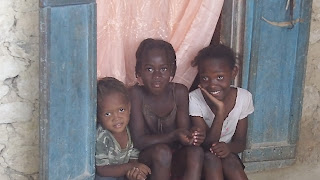


Komon ou ye? (How's it going?)
The team was really tired last night. I'm hoping that everyone slept well.
I saw a shooting star earlier this morning. I haven't seen one of those since I was here in January. The views of the constellations in this part of Haiti are absolutely amazing. Please find below, a few pictures from the trip thus far. I'll write more about the day ahead in a little while.
Bondi beni ou!! (God bless you!!)
Dave


Sunday, April 22, 2012
22 Apr...5:49p
Greetings...
Today has been fabulous!! Just fabulous!!
The morning began with breakfast at 7a, followed by Melinda's devotion on the Tower of Babel and how God frustrated man's attempts to unify and do things absent of God, like building a ridiculous tower of brick toward heaven. One has to wonder what those folks were thinking. Most likely, they were just interested in making a name for themselves. The crux of her devotion, though, centered on what Jesus did for us on the cross and how, when He ascended and subsequently sent the Holy Spirit, men spoke in tongues again, but this time it was unified as the tongues all spoke of the wonders and glories of God. It is interesting to note that God has provided the way for men to reach heaven, and that's through Jesus Christ, THE Way, THE Truth, and THE Life, the Chief Cornerstone of our faith and life in Him.
We attended church at Eglise De Frere (Church of Brothers), which is the church we attended last April (2011). For those of you who went to Haiti with us last year, we met in the building this morning. The roof hasn't been completed yet, so we were still under a tent, but it was really cool to be inside the walls of the building, the foundation for which we helped to build (by moving stones from place to place for the skilled masons) when we were here last year. Each member of the team introduced himself or herself, and then we all sang "Jesus Loves Me" in English and then in Haitian Creole'. After Melinda did a "Spoken Word", with our friend Jedlain translating for the congregation, we sung both versions of "Jesus Loves Me" again. I must write that Melinda hit it out of the park with her "Spoken Word". And it was really cool that Pastor Jean Milson hit on some of the themes Melinda covered in her "Spoken Word" and in the devotion this morning. It's a really cool thing when it becomes patently obvious Who the Conductor of all of this really is. I love it when a plan comes together. Actually, I love it when HIS plans come together. As a side, several of us were not able to hear Ronald's translation of Pastor Jean's sermon, but I must write that he was quite impassioned and that he carried himself very similarly to the way Pastor Benji Kelly does on the platfomr at newhope. We've actually nicknamed Pastor Jean Haiti's Answer to PBK.
Once church got out at around 12:40p, we came back here to the guest house to eat lunch. After changing our clothes, we loaded back up and headed back into town to do some home visits. I'm going to write a little about these experiences, but you might want to check out Melinda's blog at http://redbone.blog.com too, because, I can almost guarantee you, she'll tell it better. :o)
Madam Isaiah (Pronounced aa-ZEYE-ee)...
Madam Isaiah has been suffering terribly for close to two years with a gall stone. As it was described to us, it's been pretty bad. Up to this point, the doctors have been afraid to do surgery. Why this is so was unclear to us and, I think, to Ronald as well, who did the interpreting. Needless to write, Madam Isaiah is in desperate need of prayer. And so that's what we did as Melinda led us in doing so. BTW...as you're reading through these, please take a few moments to pray for each individual. Medical services in Haiti are limited. As such, those with medical needs are in significant need of God's healing intervention.
Madam Janis...
Madam Janis fractured her hip in a motorcycle accident this past February. She had a metal plate put into her hip, but she is still heavily limited in her mobility. The surgeon has estimated that it will take her at least six weeks to recover. BTW...in Haiti there really is no such thing as physical therapy. As such, when people undergo an operation, their time of recovery includes very little incorporation of supervised exercises into the recovery process. Connie led us in laying hands on and praying for Madam Janis.
Madam Melise...
Madam Melise has been sick for a very long time. As it was described to us, she feels significant pain and slight dizziness pretty much whenever she's not sitting. She and her husband have six children, and, it appears, that a couple of them live close enough to help with taking care of Madam Melise. Tracy led us in laying hands on and praying for Madam Melise.
Melise (Madam Melise's Husband)...
Melise has been experiencing significant pain in his stomach for some time. In fact, he sits with a stick jammed into his stomach to help him feel better. Yours truly led the team in laying hands on and praying for Melise.
Antoine (and His Son Raphael)...
Antoine used to be a witch doctor/voodoo priest. It was apparent that he had come to Christ at some point in the last two, maybe, three years. Antoine has been suffering something "very strange" (his characterization as interpreted by Ronald). Antoine was very clear that he wanted prayer for what he's been suffering and nothing else. He did indicate that he would take medicine, but that He would definitely not pursue a voodoo solution to what's been ailing him. Antoine also asked that we pray for his son's (Raphael's) salvation. Bill led the team in laying hands on and praying for Antoine and Raphael.
Midleh...
Midleh injured his knee and leg in a serious motorcycle accident on Maundy Thursday. Being quite shy, Midleh did not speak much, but he did indicate that he wanted prayer. Keith led the team in laying hands on and praying for Midleh.
After these home visits and times of prayers, we all loaded back in the bus and headed back to the guest house. A few minutes ago, we finished dinner and began our evening debrief. For now, I'd like to sign off...
Either tonight or tomorrow morning, I'll upload some photos to this site.
May God bless all of you in ways that exceed even your wildest of imaginations,
Dave
On behalf of Team Haiti 2012/April
PS...I forgot to write above that I asked Ronald about Lucienne Victor, Sorina Victor, and widow Madam Delius, the three women we visited and prayed with this past January. Ronald said that all three seem to be doing much better. I also asked Ronald if we might be able to see Jordanys, an active witch doctor that we also met in January. Hopefully, we'll get to see him.
Today has been fabulous!! Just fabulous!!
The morning began with breakfast at 7a, followed by Melinda's devotion on the Tower of Babel and how God frustrated man's attempts to unify and do things absent of God, like building a ridiculous tower of brick toward heaven. One has to wonder what those folks were thinking. Most likely, they were just interested in making a name for themselves. The crux of her devotion, though, centered on what Jesus did for us on the cross and how, when He ascended and subsequently sent the Holy Spirit, men spoke in tongues again, but this time it was unified as the tongues all spoke of the wonders and glories of God. It is interesting to note that God has provided the way for men to reach heaven, and that's through Jesus Christ, THE Way, THE Truth, and THE Life, the Chief Cornerstone of our faith and life in Him.
We attended church at Eglise De Frere (Church of Brothers), which is the church we attended last April (2011). For those of you who went to Haiti with us last year, we met in the building this morning. The roof hasn't been completed yet, so we were still under a tent, but it was really cool to be inside the walls of the building, the foundation for which we helped to build (by moving stones from place to place for the skilled masons) when we were here last year. Each member of the team introduced himself or herself, and then we all sang "Jesus Loves Me" in English and then in Haitian Creole'. After Melinda did a "Spoken Word", with our friend Jedlain translating for the congregation, we sung both versions of "Jesus Loves Me" again. I must write that Melinda hit it out of the park with her "Spoken Word". And it was really cool that Pastor Jean Milson hit on some of the themes Melinda covered in her "Spoken Word" and in the devotion this morning. It's a really cool thing when it becomes patently obvious Who the Conductor of all of this really is. I love it when a plan comes together. Actually, I love it when HIS plans come together. As a side, several of us were not able to hear Ronald's translation of Pastor Jean's sermon, but I must write that he was quite impassioned and that he carried himself very similarly to the way Pastor Benji Kelly does on the platfomr at newhope. We've actually nicknamed Pastor Jean Haiti's Answer to PBK.
Once church got out at around 12:40p, we came back here to the guest house to eat lunch. After changing our clothes, we loaded back up and headed back into town to do some home visits. I'm going to write a little about these experiences, but you might want to check out Melinda's blog at http://redbone.blog.com too, because, I can almost guarantee you, she'll tell it better. :o)
Madam Isaiah (Pronounced aa-ZEYE-ee)...
Madam Isaiah has been suffering terribly for close to two years with a gall stone. As it was described to us, it's been pretty bad. Up to this point, the doctors have been afraid to do surgery. Why this is so was unclear to us and, I think, to Ronald as well, who did the interpreting. Needless to write, Madam Isaiah is in desperate need of prayer. And so that's what we did as Melinda led us in doing so. BTW...as you're reading through these, please take a few moments to pray for each individual. Medical services in Haiti are limited. As such, those with medical needs are in significant need of God's healing intervention.
Madam Janis...
Madam Janis fractured her hip in a motorcycle accident this past February. She had a metal plate put into her hip, but she is still heavily limited in her mobility. The surgeon has estimated that it will take her at least six weeks to recover. BTW...in Haiti there really is no such thing as physical therapy. As such, when people undergo an operation, their time of recovery includes very little incorporation of supervised exercises into the recovery process. Connie led us in laying hands on and praying for Madam Janis.
Madam Melise...
Madam Melise has been sick for a very long time. As it was described to us, she feels significant pain and slight dizziness pretty much whenever she's not sitting. She and her husband have six children, and, it appears, that a couple of them live close enough to help with taking care of Madam Melise. Tracy led us in laying hands on and praying for Madam Melise.
Melise (Madam Melise's Husband)...
Melise has been experiencing significant pain in his stomach for some time. In fact, he sits with a stick jammed into his stomach to help him feel better. Yours truly led the team in laying hands on and praying for Melise.
Antoine (and His Son Raphael)...
Antoine used to be a witch doctor/voodoo priest. It was apparent that he had come to Christ at some point in the last two, maybe, three years. Antoine has been suffering something "very strange" (his characterization as interpreted by Ronald). Antoine was very clear that he wanted prayer for what he's been suffering and nothing else. He did indicate that he would take medicine, but that He would definitely not pursue a voodoo solution to what's been ailing him. Antoine also asked that we pray for his son's (Raphael's) salvation. Bill led the team in laying hands on and praying for Antoine and Raphael.
Midleh...
Midleh injured his knee and leg in a serious motorcycle accident on Maundy Thursday. Being quite shy, Midleh did not speak much, but he did indicate that he wanted prayer. Keith led the team in laying hands on and praying for Midleh.
After these home visits and times of prayers, we all loaded back in the bus and headed back to the guest house. A few minutes ago, we finished dinner and began our evening debrief. For now, I'd like to sign off...
Either tonight or tomorrow morning, I'll upload some photos to this site.
May God bless all of you in ways that exceed even your wildest of imaginations,
Dave
On behalf of Team Haiti 2012/April
PS...I forgot to write above that I asked Ronald about Lucienne Victor, Sorina Victor, and widow Madam Delius, the three women we visited and prayed with this past January. Ronald said that all three seem to be doing much better. I also asked Ronald if we might be able to see Jordanys, an active witch doctor that we also met in January. Hopefully, we'll get to see him.
22 Apr...1:35p
Ready...FIRE...aim.
Read
that again, please...
Ready...fire...aim is the banner
philosophy that lauds efficiency over effectiveness. Even if you've perhaps never heard such a phrase
articulated before, if you're like most people, you've no doubt encountered at
least one or two individuals who've either done or asked you to do that very
thing. I have, unfortunately,
encountered this way of thinking (and doing) more than a few times in my
life. (And, sadly, I’ve operated in
accordance with it at times, too.)
Even
though I probably don't need to write it, I'm going to anyway: "I'm not a huge fan of Ready...fire...aim." Not only is it ineffective but it can, at
times, produce devastating results. When
I was in Nicaragua a few years ago, I saw first-hand the damaging effects just
such a philosophy can have on people. At
the time, I was with Engineers Without Borders, and I was leading a small team
of engineers tasked with evaluating the quantity and quality of drinking water
supplies in Kisilaya, one of several hundred-plus villages that comprise an
autonomous conglomerate of tribal settlements that occupy The Mosquito Coast of northeastern Nicaragua and southern Honduras.
As
we launched in to our evaluation, we discovered that the village of Kisilaya
had three wells, each of which had the capacity to more than adequately supply
the safe drinking water needs of the surrounding villagers. But not everyone was getting his or her water
from one of the wells, and, as a result, several of the adults and about 40% of
the children were suffering from incontinence and the associated dehydration
that results from such a condition.
Why
were they sick? Because many of the people
were drawing their water from a polluted stream that ran through their village.
And
why was the stream polluted? Well, because
varied collections of women in the village took turns washing their clothes and
dishes in the stream throughout each week.
(For those of you who might not be aware of this, this practice provides
a huge social outlet for the women in such villages.) In addition to that, roaming livestock had
unrestricted access to the river, and some of the younger boys played and bathed
in the river almost daily. While the
villagers knew intuitively to draw their water upstream of many of the above
activities, they were seemingly unaware that another village, very similar to
their own and about ten minutes upstream of Kisilaya, was using the river in
similar ways. Without their conscious
awareness, the villagers of Kisilaya were drawing their cooking and drinking water
from what was, in many ways, the waste effluent of an upstream village.
And
why were the people drawing water from the polluted stream instead of from one
of the wells? Well, in addition to the
things about the village that I mention below, they were doing this because the manually-operated well
pumps at two of the three wells were broken.
And
why were the well-pumps broken? As best
as we could determine, the principal reasons for this were as such:
Reason 1
The international agency that installed the wells did
so without the buy-in and understanding of the village.
According
to Rose (our miskitu interpreter), the villagers weren't even asked for their
opinions as to what they wanted or needed or what might nest well within their
centuries-old customs, traditions, and social practices. Rose also said that "once the group who
built the project completed it, they just up and left, and, among all the other
work we needed to do, left us with a big mess to clean up." (It is interesting to note that out of all
the groups who'd visited and done work in the village of Kisalaya, the village
leaders said that ours was the first to actually engage the people in
conversation and then, through repeated back-and-forth dialogue, come to an
understanding of what the people in the village really wanted. Even though this didn't really surprise me,
it saddened me just the same. How rude
and arrogant it is for any of us to just decide for another what that one wants
or needs without even asking.)
Reason 2
The rope-and-piston well pumps were, by our estimation,
constructed with cheap, inadequate materials.
(In fact, if you looked too closely at the pump, the welds on the
support frame broke, and the PVC pipe split or crimped—all on its own. I am, of course, exaggerating, but not overly
so.)
As
it turns out, the lynch-pin of the malfunctioning rope-and-piston system was a $3
rope, which, unfortunately, could not handle the water load. Consequently, it kept snapping after only a
few months' use. After more than a dozen
instances of fixing or replacing the rope, and concurrent with the failing
health of the man who had done his best to keep the two wells nearest him
operational, the villagers gave up on the wells and, not surprisingly, fell
back on their previous ways of doing things.
The man who took care of the third well, which was located in another part of the village, saw
no reason to take care of the other two; after all, "his" well was
working just fine. In fact, he acted as
though the well was his and treated everyone accordingly by erecting a
structure around it and by locking the access.
Those who remained in "good standing" with this man (basically
through curried favors and words of social esteem), were granted limited access
to the well.
After
spending nearly ten days in the area, our team learned a little more about the
context for the above. It seems that
there was very little understanding (by the villagers) concerning the proper operation
and maintenance of the wells. In
addition, no money was being collected to cover the maintenance costs. Thirdly, given the abundance of water that
ran daily through the local stream, there was very little understanding (again
by the villagers) of why the wells were needed in the first place.
What
happened in Kisilaya was, I believe, a good example of the results and
by-products of Ready...fire...aim.
While
I do not wish to disparage the village of Kisilaya or those who conceived of
and implemented the water project, it must be written that the project was, in nearly
every sense of the word, a failure. I'm quite
sure that those who spear-headed the project meant well and intended to do
something good "to help" those who appeared to be in need. In actuality, though, I don't think anyone
was helped. To me, it seemed that the
exact opposite occurred: that which was intended
to bring aid actually caused injury instead.
I share the above story as just one among many perspectives that have arrisen in my own life concerning serving in a developing/rebuilding country. I hope and pray that we're all beginning to learn from some of the mistakes of the past. One of the things I love about The 410 Bridge (410), the umbrella sending agency that we travel under to both Haiti
and Kenya, is that anything done in a partner village, such as Bohoc, Haiti, is initiated,
worked, and completed by the villagers themselves. The village garden project that we will be
working on alongside the villagers over the next few days is THEIR project, meaning, it belongs to the villagers of Bohoc. It's not a 410 project; it's not a newhope church project; it's a Haitian
project and, more specifically, a Bohoc
project. The slogan we keep in the
forefront of our minds as this: An inch wide, a mile deep. In focusing on becoming a more devoted Christ-follower, building relationships, and empowering our friends in Bohoc, things are going deep...and the villagers know it. And thank God for it. We're just glad to be able to be a part of what God's doing in the hearts of our friends.
More
about today in a little while...
Dave
22 Apr...6:04a
Greetings, everyone...
As a part of operating this missions blog, I wish to, on occassion, provide some 30,000-ft perspectives on missions—especially, short-term missions. Provided below, is just such a thing. I hope that this will give you some insight into how we at newhope church endeavor to engage in international missions.
___
The International Mission Trip: Is it an Effort to Help, an Effort to Serve, or Both?
My answer (as always) is...it depends.
While I do think that "help" is needed in times of crisis and emergency, I am much more interested in the long-term development of people and in their finding greater measures healing, purpose, and reconciliation in life. Out of this desire, it has become my life-long ambition to live a missional life of selfless service. My prayer is that God will continue to forge such things in and through me and in and through all those for which (and withwhom) I serve.
Regarding short-term mission trips, the most common question I get upon returning home from a trip is this: "So what did you do while you were there?" Despite what you might think, answering such a question can be a little difficult. Mostly, I answer with something akin to the following: "We just spent time with our new Haitian friends…praying and worshiping with them, listening to them, playing with them, and working alongside them."
"How many wells did you dig?" Ummm....none.
"How many latrines did you construct?" Ummm...zero.
"How many people did you see come to faith in Jesus?" I'm really sorry, but I haven't the foggiest of notions.
Sometimes, after I provide such answers, I get a variety of reactions from blank stares, to "That’s nice," to "Well...did you have a good time?"
I understand a little of the frustrations of those asking me about such a trip. I really do. We in the U.S. tend to value time, efficiency, and the bottom line over just about anything else. This can be seen in our Monday morning quarterbacking and in our emphasis on P and L statements, church attendance counts, website stats, and the number of "widgets" produced last month in factory x. Not that such things aren’t valuable, because they certainly can be, it’s just that many cultures outside the U.S. tend to place a much higher priority on things that aren't typically reflected in the efficiency measures we value so highly in the states. For instance (and, BTW, this is NOT intended to be a slam on the U.S. [for I LOVE the U.S.!]; rather it is an attempt to illuminate a difference that exists between the U.S. and some of the cultures I've visited in recent years), the Haitians and the Kenyans—two people groups that I have grown to love dearly—place a much higher priority on togetherness, community, and the building of lasting friendships than most of us do in the west. For those of us experiencing such things for the first or second times, the "shock" of such an exposure can be disconcerting—especially, upon returning home after such a trip. Re-assimilating back into the culture of central North Carolina after hanging out in Bohoc, Haiti, for a week or so can be quite challenging. Just ask anyone who’s ever come back from such a trip. :o)
Two years ago, Benji Kelly, Senior Pastor of newhope church, asked me to write a "two-year game plan" for international missions at newhope. In that document, I wrote what I believed to be "our" missional philosophy. Below is an excerpt from that work. The same can be found on the newhope curch website at the following link: http://www.newhopenc.org/Serve/HOPEmissions/International-Missions.aspx.
While there are many ways to engage in mission, it is our intention at newhope church to pursue international missions activity by partnering with very discrete and specific communities as they seek to follow Christ and to do for themselves that which they feel must be done to create flourishing, sustainable communities devoted to the Lordship of Jesus Christ.
The provision of disaster recovery (the rehabilitation that occurs after "the bleeding has stopped") or development resources that are not community based (basically, initiated, driven, AND managed by the community) will fail—PERIOD. History teaches that this is the case. Once "the bleeding has stopped," the community directly affected must be intimately involved in and with their own rehabilitation and development. As servants of the King, we must do all that is in our power to come alongside those who are hurting and who are trying to recover and develop themselves; but just as a physical therapist cannot make someone do his or her shoulder exercises, we cannot (nor should we EVER) do for others what they can (and must) do for themselves. To attempt to do otherwise is completely disrespectful, creates dependency, leads to 'unhealthy giving,' and, quite literally, hurts everyone involved.
To be good stewards of that which God has given us—time, talents, gifts, financial resources, etc.—it appears to me to be the most God-honoring when what we have to give is given in the context of a committed relationship, where we come alongside our brothers and our sisters in a specific place as they work together, under community leadership, to follow Christ and to develop from within.
Currently, we at newhope are partnering internationally with the following two communities through The 410 Bridge: Bohoc, Haiti (where we are right now in this VERY moment), and Kiria, Kenya. To date, we've visited Kiria twice (July 2010 and July 2011) and Bohoc three times (April 2011, January 2012, and, of course, right now [April 2012]). It is our intention to do our best to visit both communities at least twice a year for the foreseeable future.
The plan for the rest of this year and then year 2013 is as follows:
Kiria, Kenya (September 2012)
Bohoc, Haiti (Tentatively January 2013)
Bohoc, Haiti (Tentatively April 2013)
Kiria, Kenya (Tentatively June 2013)
Kiria, Kenya (Tentatively September 2013)
As I wrote yesterday, if you're interested in going on an upcoming mission trip, please contact me at hopemissions@newhopenc.org. Please note that we still have space on the September 2013 trip to Kenya.
If you would like to pray for mission teams or would like to be a part of sending them, please e-mail me as well. AND...if you would be so kind as to do this, please go to the Prayer Requests blogspot post from last week and consider praying for the team that's right now serving our Master and His people right here in Haiti.
More later...(including, Lord-willing, some pictures!)...
Jezi l'aime ou (Jesus loves you),
Dave
On Behalf of Team Haiti 2012/April
As a part of operating this missions blog, I wish to, on occassion, provide some 30,000-ft perspectives on missions—especially, short-term missions. Provided below, is just such a thing. I hope that this will give you some insight into how we at newhope church endeavor to engage in international missions.
___
The International Mission Trip: Is it an Effort to Help, an Effort to Serve, or Both?
My answer (as always) is...it depends.
While I do think that "help" is needed in times of crisis and emergency, I am much more interested in the long-term development of people and in their finding greater measures healing, purpose, and reconciliation in life. Out of this desire, it has become my life-long ambition to live a missional life of selfless service. My prayer is that God will continue to forge such things in and through me and in and through all those for which (and withwhom) I serve.
Regarding short-term mission trips, the most common question I get upon returning home from a trip is this: "So what did you do while you were there?" Despite what you might think, answering such a question can be a little difficult. Mostly, I answer with something akin to the following: "We just spent time with our new Haitian friends…praying and worshiping with them, listening to them, playing with them, and working alongside them."
"How many wells did you dig?" Ummm....none.
"How many latrines did you construct?" Ummm...zero.
"How many people did you see come to faith in Jesus?" I'm really sorry, but I haven't the foggiest of notions.
Sometimes, after I provide such answers, I get a variety of reactions from blank stares, to "That’s nice," to "Well...did you have a good time?"
I understand a little of the frustrations of those asking me about such a trip. I really do. We in the U.S. tend to value time, efficiency, and the bottom line over just about anything else. This can be seen in our Monday morning quarterbacking and in our emphasis on P and L statements, church attendance counts, website stats, and the number of "widgets" produced last month in factory x. Not that such things aren’t valuable, because they certainly can be, it’s just that many cultures outside the U.S. tend to place a much higher priority on things that aren't typically reflected in the efficiency measures we value so highly in the states. For instance (and, BTW, this is NOT intended to be a slam on the U.S. [for I LOVE the U.S.!]; rather it is an attempt to illuminate a difference that exists between the U.S. and some of the cultures I've visited in recent years), the Haitians and the Kenyans—two people groups that I have grown to love dearly—place a much higher priority on togetherness, community, and the building of lasting friendships than most of us do in the west. For those of us experiencing such things for the first or second times, the "shock" of such an exposure can be disconcerting—especially, upon returning home after such a trip. Re-assimilating back into the culture of central North Carolina after hanging out in Bohoc, Haiti, for a week or so can be quite challenging. Just ask anyone who’s ever come back from such a trip. :o)
Two years ago, Benji Kelly, Senior Pastor of newhope church, asked me to write a "two-year game plan" for international missions at newhope. In that document, I wrote what I believed to be "our" missional philosophy. Below is an excerpt from that work. The same can be found on the newhope curch website at the following link: http://www.newhopenc.org/Serve/HOPEmissions/International-Missions.aspx.
While there are many ways to engage in mission, it is our intention at newhope church to pursue international missions activity by partnering with very discrete and specific communities as they seek to follow Christ and to do for themselves that which they feel must be done to create flourishing, sustainable communities devoted to the Lordship of Jesus Christ.
The provision of disaster recovery (the rehabilitation that occurs after "the bleeding has stopped") or development resources that are not community based (basically, initiated, driven, AND managed by the community) will fail—PERIOD. History teaches that this is the case. Once "the bleeding has stopped," the community directly affected must be intimately involved in and with their own rehabilitation and development. As servants of the King, we must do all that is in our power to come alongside those who are hurting and who are trying to recover and develop themselves; but just as a physical therapist cannot make someone do his or her shoulder exercises, we cannot (nor should we EVER) do for others what they can (and must) do for themselves. To attempt to do otherwise is completely disrespectful, creates dependency, leads to 'unhealthy giving,' and, quite literally, hurts everyone involved.
To be good stewards of that which God has given us—time, talents, gifts, financial resources, etc.—it appears to me to be the most God-honoring when what we have to give is given in the context of a committed relationship, where we come alongside our brothers and our sisters in a specific place as they work together, under community leadership, to follow Christ and to develop from within.
Currently, we at newhope are partnering internationally with the following two communities through The 410 Bridge: Bohoc, Haiti (where we are right now in this VERY moment), and Kiria, Kenya. To date, we've visited Kiria twice (July 2010 and July 2011) and Bohoc three times (April 2011, January 2012, and, of course, right now [April 2012]). It is our intention to do our best to visit both communities at least twice a year for the foreseeable future.
The plan for the rest of this year and then year 2013 is as follows:
Kiria, Kenya (September 2012)
Bohoc, Haiti (Tentatively January 2013)
Bohoc, Haiti (Tentatively April 2013)
Kiria, Kenya (Tentatively June 2013)
Kiria, Kenya (Tentatively September 2013)
As I wrote yesterday, if you're interested in going on an upcoming mission trip, please contact me at hopemissions@newhopenc.org. Please note that we still have space on the September 2013 trip to Kenya.
If you would like to pray for mission teams or would like to be a part of sending them, please e-mail me as well. AND...if you would be so kind as to do this, please go to the Prayer Requests blogspot post from last week and consider praying for the team that's right now serving our Master and His people right here in Haiti.
More later...(including, Lord-willing, some pictures!)...
Jezi l'aime ou (Jesus loves you),
Dave
On Behalf of Team Haiti 2012/April
Subscribe to:
Posts (Atom)